Why Snoqualmie Weather Demands Smarter Commercial Roofing Choices

Why Snoqualmie Weather Demands Smarter Commercial Roofing Choices

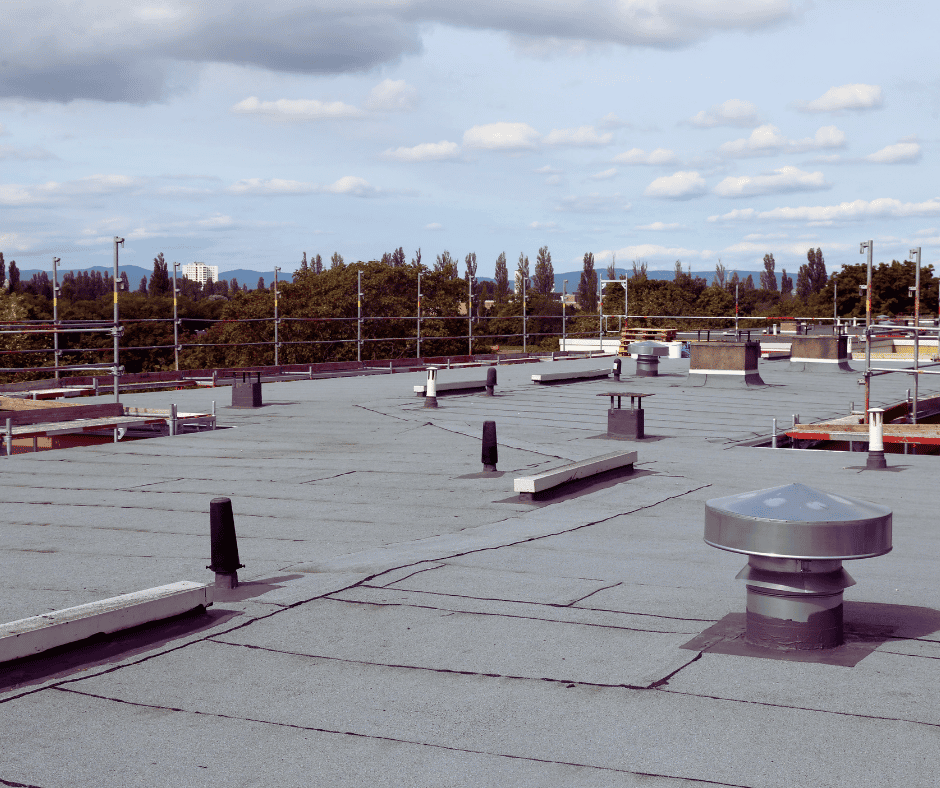
A facility manager at a 22,000 square foot warehouse along the Snoqualmie Parkway pulled the inspection report after the November atmospheric river event and found three failure points his commercial flat roof did not have eighteen months earlier. The first two were drain inlet seal failures around tapered insulation transitions. The third was a 14-foot section of TPO membrane that had separated at a mechanically fastened seam after sustained ponding water exceeded the assembly's design tolerance. The roof itself was only six years old and installed by a Seattle contractor who priced the job low and skipped the cover board layer that the manufacturer's premium warranty required. The repair bill is now competing with what a properly engineered commercial roof installation in Snoqualmie, WA project would have cost in 2020 had the original specification respected the local climate. This is the pattern Atlas Roofing Services sees across the Snoqualmie Valley every wet season, and it is the reason commercial roof installation in this market cannot be approached as a generic Pacific Northwest job.

Snoqualmie sits 27 miles east of Seattle along I-90 in King County's eastern foothills at the wildland-urban interface where Cascade Range weather meets the Puget Sound lowlands. The city's commercial inventory across the 98065 zip code includes 191,900 square feet of office space spread across eight buildings, 89,220 square feet of retail, and 40,800 square feet of industrial property concentrated in the Snoqualmie Ridge Business Park and the downtown commercial core. None of that inventory was protected by a roof that designs around weather averages will perform well long-term. Smart commercial roof installation Snoqualmie WA work designs around the maximum sustained event, not the average, and that distinction shows up most clearly in seam integrity, drainage capacity, and insulation specification.

Snoqualmie Wind Uplift Pressures Exceed Seattle Standards

Wind uplift design for Snoqualmie commercial flat roofs needs to account for 90-plus pound-per-square-foot pressures at corners and perimeters, compared to the 60 to 75 pound-per-square-foot pressures common in downtown Seattle commercial roofing. The Cascade Range gust pattern produces higher peak loads than the Puget Sound lowlands, which is why ES-1 certified edge metal and proper fastener spacing matter more in Snoqualmie than in coastal King County applications.

The Snoqualmie Mill Redevelopment Will Reshape Local Commercial Roofing Demand

The Snoqualmie Mill 261-acre Planned Commercial Industrial site was approved by the Snoqualmie City Council in October 2022 after a multi-year environmental review process. As phased development proceeds through the late 2020s and 2030s on the former Weyerhaeuser Snoqualmie Lumber Mill site (which closed in 2003), new commercial roofing demand at the Mill will produce significant industrial-scale flat roof and warehouse roofing work for the local market.

Heat-Welded TPO Seams Are Stronger Than the Membrane Itself

Properly heat-welded TPO membrane seams test stronger than the surrounding membrane material itself, which means a 60-mil TPO seam in a Snoqualmie commercial roof installation typically fails at the membrane field before failing at the seam. This is the single biggest performance advantage TPO and PVC hold over tape-seamed EPDM in high-moisture climates

The Pacific Northwest Climate Pattern That Defines Snoqualmie Commercial Roofing

The Snoqualmie Valley receives approximately 60-plus inches of annual rainfall, with sustained wet periods running October through April. The number alone does not capture the operational stress on a commercial roof. The intensity profile matters more than the total. Atmospheric river events deliver three to five inches of rain in a 24-hour window with rates that overwhelm standard internal drains designed for code-minimum flow. Wind gusts from Cascade Range weather systems regularly exceed 60 miles per hour at higher elevations and create wind uplift conditions that test edge metal attachment, parapet flashing, and field membrane adhesion all at once.

Forest canopy debris from the surrounding evergreens accumulates faster in Snoqualmie than in most King County commercial markets because the city sits closer to the Cascade foothills than Bellevue, Redmond, or Kirkland. Needle drop in fall and small branch debris in winter clog drains, contribute organic matter that supports moss colonization on porous roofing surfaces, and create localized ponding zones that turn into seam stress points within five to seven years if drainage is not actively managed. A commercial roof installation Snoqualmie WA contractor who treats the local context as identical to coastal Seattle conditions misses these specifics.

Freeze-thaw cycling at Snoqualmie's elevation adds another factor that lowland Eastside cities do not face as severely. When temperatures cross the freeze line repeatedly during shoulder seasons, water that has worked into a marginal seam expands during the freeze, then retreats when temperatures rise, then fills the slightly enlarged void during the next thaw. Three to five years of this cycle on a poorly fastened seam produces visible separation. Commercial flat roof seams in Snoqualmie need to be heat-welded thermoplastic (TPO or PVC) rather than tape-seamed EPDM where freeze-thaw exposure is significant, or the seam strategy needs explicit accommodation through fully adhered installation rather than mechanical fastening alone.

How the Snoqualmie Commercial Property Mix Shapes Roofing Decisions

Snoqualmie's commercial inventory is concentrated in three distinct property types, each requiring different commercial roof installation approaches. The Snoqualmie Ridge Business Park anchors the office and flex tech segment with 98 acres of master-planned space and listings ranging from 100,000 to 590,653 square feet. These mid-rise office buildings typically work best with mechanically fastened TPO over polyiso insulation because the large flat surface area benefits from the cost efficiency of mechanical attachment, while the heat-welded TPO seam handles the moisture pressure that the Snoqualmie climate produces.

The downtown Snoqualmie commercial core along Railroad Avenue and Center Boulevard contains smaller retail and mixed-use buildings, often with parapet walls, multiple penetrations for HVAC equipment, and aesthetic considerations driven by the city's Design Review Board requirements. These properties typically benefit from fully adhered TPO or PVC installation where seam visibility matters, where rooftop equipment density creates more complex flashing details, and where premium manufacturer warranties (which often require fully adhered systems for 25 to 30 year coverage) are part of the property owner's investment thesis.

The Snoqualmie Mill site is the largest single redevelopment opportunity in the local commercial market. The 261-acre Planned Commercial Industrial site was approved by the Snoqualmie City Council in October 2022 after a multi-year environmental review process. The site formerly housed the Weyerhaeuser Snoqualmie Lumber Mill, which closed in 2003. As phased development proceeds through the late 2020s and into the 2030s, new commercial roof installation Snoqualmie WA work at the Mill site will produce significant demand for industrial-scale flat roof systems, warehouse roofing assemblies, and mixed-use commercial roofing that respects both the Snoqualmie weather context and the city's design standards.

The Material Choices That Match Snoqualmie Weather Reality

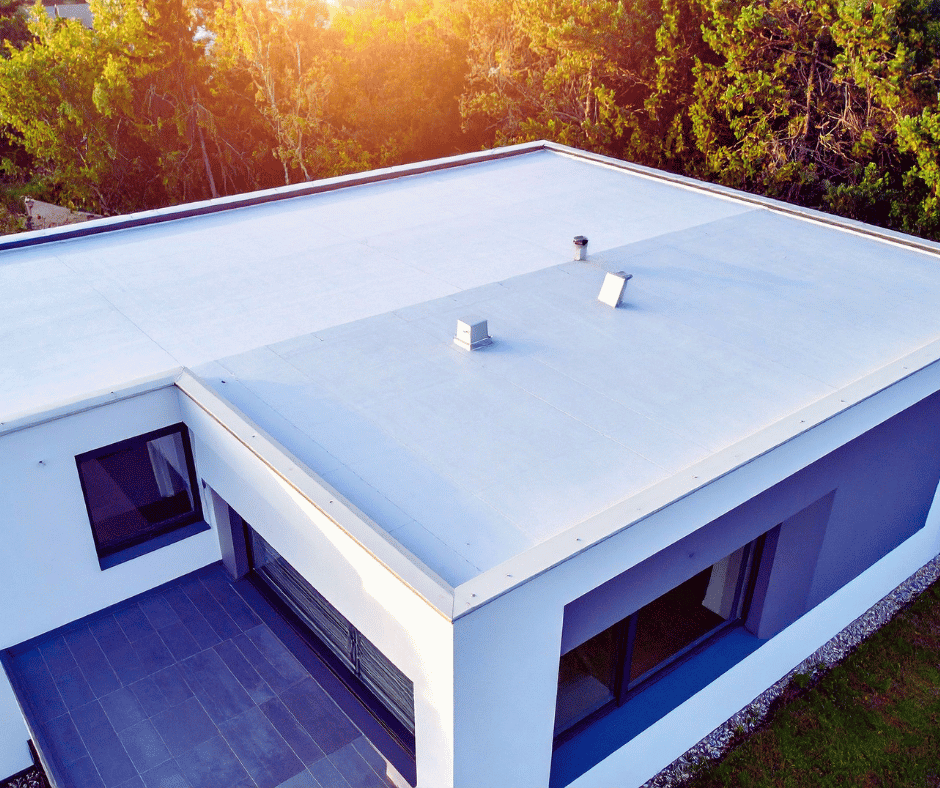
TPO membrane in 60-mil or 80-mil thickness has become the dominant commercial roof installation Snoqualmie WA choice for office, retail, and industrial flat roof applications. The reasons are specific to local weather. Heat-welded TPO seams are stronger than the membrane material itself, which matters when sustained moisture pressure works on every seam in the roof for six months out of every year. The white reflective surface delivers cool roof energy savings during the modest summer warm season. Major manufacturers (Carlisle SynTec Sure-Weld, GAF EverGuard, Firestone UltraPly, Johns Manville JM TPO) all offer 20 to 30 year manufacturer warranties when installed by certified contractors. The 2026 installed cost runs $6.50 to $11.50 per square foot for a complete TPO system including polyiso insulation, cover board, and edge metal, which translates to a $65,000 to $115,000 budget range for a typical 10,000 square foot commercial project.

PVC membrane is the right choice for Snoqualmie commercial roof installation work where chemical exposure matters. Restaurant grease exhaust, food processing facility discharges, and industrial manufacturing environments all degrade TPO and EPDM through chemical attack. PVC resists these conditions, which is why Salish Lodge restaurant installations, Snoqualmie Casino food service areas, and any of the future Mill site food service tenants will benefit from PVC over TPO despite the higher cost ($9 to $14 per square foot installed in 2026). The heat-welded PVC seam is the strongest in the commercial roofing industry, which adds a margin of safety on top of the chemical resistance for properties that face both grease exposure and Snoqualmie weather pressure.

EPDM (ethylene propylene diene monomer) remains a viable commercial roof installation option for specific Snoqualmie applications, particularly larger industrial buildings where ballasted attachment makes sense and where the 60-plus inches of annual rainfall is offset by the structural capacity to support stone ballast. EPDM costs run $4.20 to $14.25 per square foot installed in 2026 depending on attachment method and membrane thickness, with ballasted attachment at the low end ($4 to $7) and fully adhered 90-mil at the high end. The Snoqualmie freeze-thaw consideration argues against tape-seamed EPDM in most local applications, but adhesive-seamed EPDM in fully adhered configurations performs reliably when the budget favors EPDM over TPO.

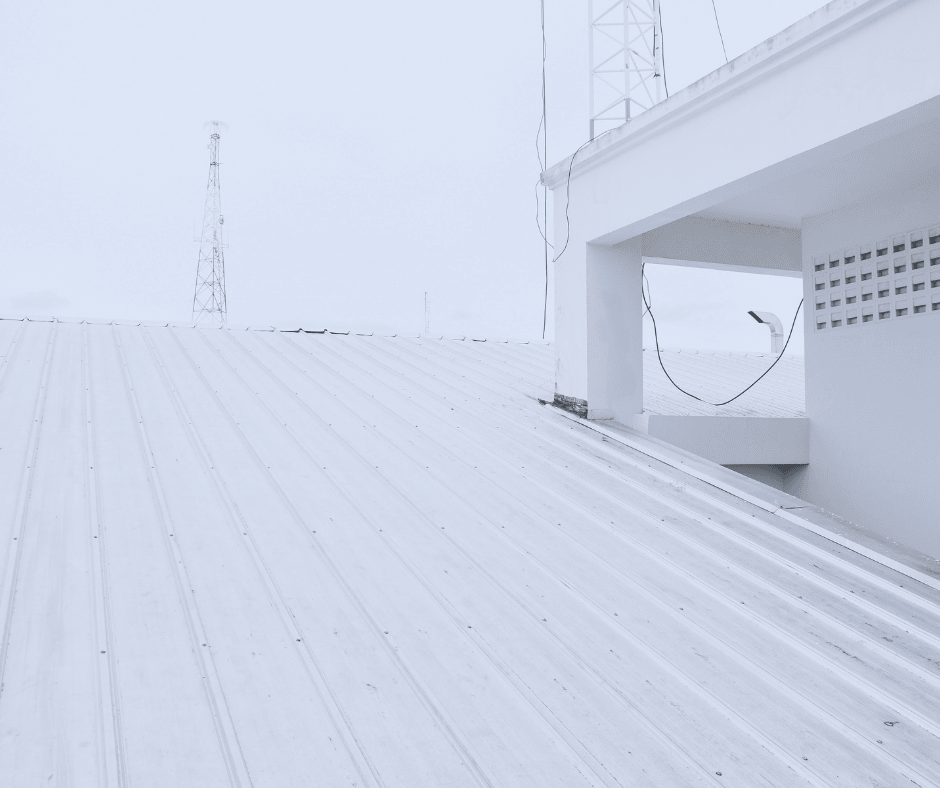
Standing seam metal is the long-term winner for Snoqualmie commercial roof installation projects where 40 to 60 year service life justifies the higher upfront cost ($10 to $18 per square foot installed in 2026). The Pacific Northwest climate is actually favorable for metal roofing because moss does not adhere to smooth metal surfaces, snow shed performance handles Cascade snow loads without ice damming, and 24-gauge or 26-gauge Galvalume-coated steel with Kynar 500 paint finish handles freeze-thaw, UV exposure, and wind uplift without the seam concerns that plague membrane systems. Standing seam metal at 1.5-inch, 1.75-inch, or 2-inch profile heights with snap-lock or mechanical seam locking is the right specification for warehouse, industrial, and aesthetic-driven retail applications across the Snoqualmie Valley.
The Insulation Specification That Snoqualmie Code Requires

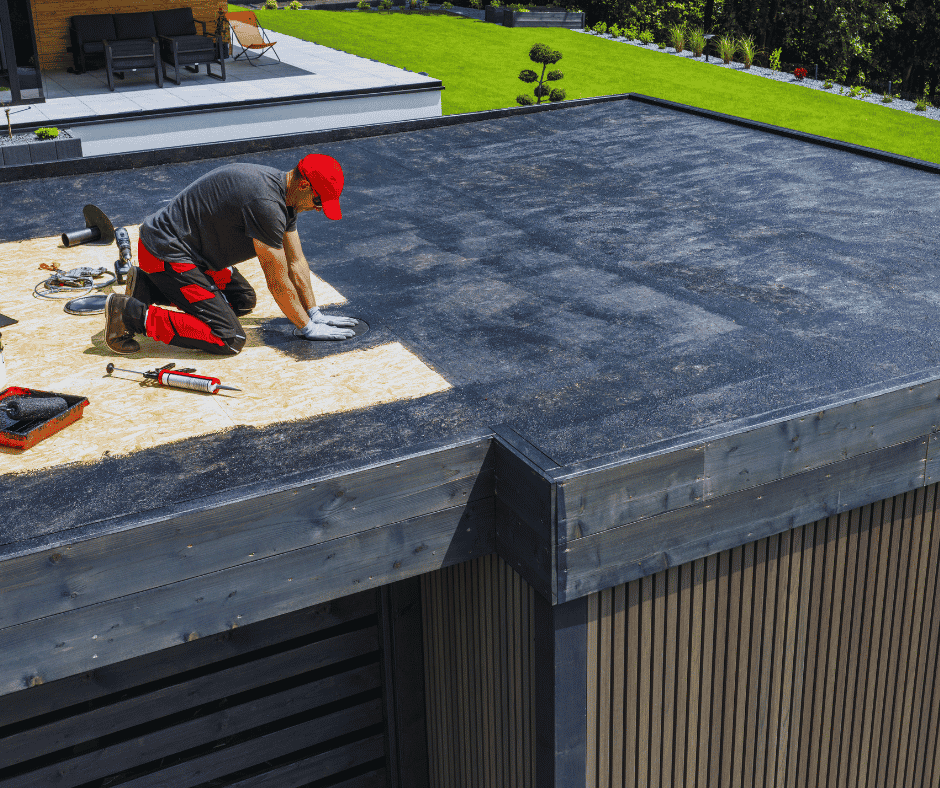
Washington State Climate Zone 5 (which includes Snoqualmie) requires R-30 minimum insulation for commercial low-slope roof assemblies under the 2021 Washington State Energy Code (WSEC), with the 2025 WSEC update tightening continuous insulation requirements further. R-30 translates to approximately 5 inches of polyiso insulation board (R-6 per inch performance) installed continuously above the roof deck. Cover board specification (HD polyiso, DensDeck Prime, or equivalent) protects the insulation from membrane fastener penetration and provides the substrate for proper TPO or PVC adhesion. Skipping the cover board to save $0.50 to $1.00 per square foot on the project budget is the single most common cost-cutting decision that produces premature failure on Snoqualmie commercial roof installation projects.

COMcheck compliance documentation is required for commercial building permits in Snoqualmie, and the Snoqualmie Building Division requires the documentation to be submitted as part of the building permit application. Atlas Roofing Services handles COMcheck preparation as part of the commercial roof installation Snoqualmie WA process so the property owner does not have to coordinate the energy compliance separately from the roofing scope.

Wind Uplift and Why It Matters More in Snoqualmie

The Cascade Range produces gust events that exceed wind uplift design pressures common across Western Washington commercial roofing. A flat roof in downtown Seattle designs around 60 to 75 pound-per-square-foot wind uplift pressures. A Snoqualmie commercial roof installation needs to design around 90-plus pound-per-square-foot pressures at the corners and perimeter, where uplift forces concentrate. The difference shows up in fastener pattern density, in edge metal specification (ES-1 certified edge metal is the minimum standard for properly engineered Snoqualmie commercial work), and in attachment method selection.

Mechanically fastened TPO at 12-inch fastener spacing in the field with 6-inch spacing at the perimeter handles most Snoqualmie commercial wind exposure. Higher-exposure properties (those with significant elevation, those near the Cascade foothills with direct wind alignment, those with parapet wall configurations that concentrate uplift) often need induction-welded TPO with no membrane penetrations in the field, fully adhered TPO or PVC with continuous adhesive bond to the substrate, or a combination of both depending on the specific assembly engineering.

Edge metal performance is where many Snoqualmie commercial roof installation failures originate. ES-1 certified edge metal under ANSI/SPRI ES-1 testing is rated for specific wind uplift pressures, and matching the edge metal rating to the actual Snoqualmie wind exposure (rather than defaulting to a generic specification that works in most King County applications) is the difference between a roof that holds during a January atmospheric river event and a roof that loses 20 feet of perimeter during the storm.

Drainage Engineering for Snoqualmie Rainfall Intensity

A commercial flat roof in Snoqualmie needs to handle peak rainfall rates that approach 1.5 to 2 inches per hour during atmospheric river events. Code-minimum drain sizing handles average storm conditions but not peak intensity. Smart commercial roof installation Snoqualmie WA design uses larger primary drains (4-inch versus 3-inch) and adds secondary overflow drainage at lower thresholds than code minimum to provide redundancy when primary drains are partially blocked by debris.

Tapered insulation systems (typically 1/4-inch per foot tapered polyiso) are the right specification for nearly all Snoqualmie commercial flat roof applications because flat-flat roof construction (truly level) accumulates standing water at any low point produced by deck deflection, support settlement, or insulation compression over time. Tapered insulation builds positive drainage into the roof assembly itself, which means the roof drains correctly even if the structural deck has minor irregularities.

Drain inlet detailing is the most common failure point on Snoqualmie commercial roofing. The transition from membrane to drain bowl must be properly sealed, the clamping ring must be torqued to manufacturer specification, and the drain strainer must be installed and maintained. Annual maintenance to clear drain strainers of needle and leaf debris is the cheapest insurance against ponding water failures, and it should be on every Snoqualmie commercial property manager's calendar between October and April.

The Year-Round Installation Window That Snoqualmie Climate Allows

Most national commercial roofing markets shut down for winter installation due to cold-weather adhesive curing limitations, snow accumulation on work surfaces, or freeze concerns with water-based products. Snoqualmie's mild climate (winter daytime highs typically 38 to 48 degrees Fahrenheit, with rare prolonged freezes) supports year-round commercial roof installation when contractors plan around weather windows. This creates scheduling flexibility for property owners who want to complete a commercial roof installation Snoqualmie WA project ahead of the next wet season without competing for summer crew availability.

Atlas Roofing Services scheduling reflects this year-round installation viability. The six-day operational schedule (Monday through Friday 8 AM to 5 PM, Sunday 8 AM to 5 PM) supports both standard weekday scheduling and weekend tenant accommodation for retail and office properties where weekday tear-off creates business disruption. Sunday operational coverage is differentiation that most King County commercial roofing competitors do not offer.

Why Snoqualmie Property Owners Choose Atlas Roofing Services for Commercial Roof Installation

Atlas Roofing Services serves Snoqualmie and the broader Snoqualmie Valley from the Renton headquarters at 707 S Grady Way Suite 600-8 in zip 98057, with full coverage of the Snoqualmie 98065 zip code grid plus extended Snoqualmie Valley coverage including North Bend (98045), Fall City (98024), Carnation (98014), Duvall (98019), and Preston. Service area extends across Eastside King County (Bellevue, Redmond, Kirkland, Issaquah, Sammamish, Mercer Island), Seattle, and South King County (Renton, Tukwila, Kent, Auburn). Washington State licensed contractor. Fully insured operation. Manufacturer certifications across major commercial roofing brands including Carlisle SynTec, Firestone Building Products, Johns Manville, and GAF for thermoplastic and EPDM systems. Six-day operational schedule with Sunday coverage that creates scheduling flexibility most King County competitors cannot match. Free estimate with detailed written proposal including COMcheck compliance documentation, R-30 continuous insulation specification, ES-1 edge metal selection, and tapered insulation drainage engineering matched to the specific Snoqualmie wind and rainfall profile. Year-round installation capability given the mild Snoqualmie climate. Manufacturer-backed material warranties up to 30 years on premium fully adhered TPO and PVC systems. Workmanship warranty on installation labor. Insurance claim documentation support for storm and wind damage projects. Call (425) 728-6634 to schedule a commercial roof installation Snoqualmie WA consultation for properties across the Snoqualmie Ridge Business Park, downtown Snoqualmie commercial core, the Snoqualmie Mill redevelopment area, the Salish Lodge vicinity, and the broader 98065 commercial inventory.

Redirect to:


Frequently Asked Questions


TPO membrane in 60-mil or 80-mil thickness has become the dominant Snoqualmie commercial flat roof choice for office, retail, and industrial applications because heat-welded seams handle sustained moisture pressure better than tape-seamed alternatives, and the white reflective surface delivers cool roof energy savings. PVC is the right choice for restaurants, food service properties, and any building with chemical exposure that would degrade TPO. Standing seam metal works best for warehouses and properties where 40 to 60 year service life justifies the higher upfront cost. EPDM remains viable for large industrial buildings with structural capacity for ballasted attachment, but freeze-thaw cycling at Snoqualmie's elevation favors heat-welded thermoplastic over tape-seamed rubber for most applications.
Commercial roof installation in Snoqualmie runs $6.50 to $11.50 per square foot for TPO systems in 2026, which translates to a $65,000 to $115,000 budget range for a typical 10,000 square foot commercial project. PVC installation costs $9 to $14 per square foot. EPDM ranges from $4.20 to $14.25 per square foot depending on attachment method (ballasted, mechanically fastened, or fully adhered) and membrane thickness. Standing seam metal runs $10 to $18 per square foot installed. Final pricing depends on roof complexity, tear-off requirements, insulation specification (R-30 minimum continuous insulation under Washington Climate Zone 5), edge metal rating, and access conditions.
Most Snoqualmie commercial roof installations take one to four weeks depending on roof size, complexity, and weather windows. A 10,000 square foot single-membrane TPO replacement typically completes in 7 to 14 working days including tear-off, deck inspection, insulation installation, membrane application, and edge metal completion. Larger warehouse or industrial projects above 30,000 square feet run three to six weeks. Snoqualmie's mild winter climate supports year-round installation when contractors plan around weather windows, which means commercial roof installation projects do not need to wait for summer like many national markets require. Atlas Roofing Services schedules around tenant operations to minimize business disruption during the installation period.